Sinasos: A Place Built Between Civilizations

.avif)
Some destinations are beautiful because of what was built there.
Others become unforgettable because of what was lived there.
Sinasos belongs to the second category.
Located in the heart of Cappadocia, the historic village now known as Mustafapaşa carries a rare cultural density shaped through centuries of exchange, education, trade, spirituality, and coexistence. Long before modern tourism arrived, Sinasos was already connected to the wider world.
Not through scale.
But through culture.
Historically inhabited by Anatolian Greeks alongside Muslim communities, Sinasos developed a unique architectural and intellectual identity within the region. Wealth generated through trade — particularly through the caviar trade routes connected to Istanbul and beyond — helped shape the village into one of the most refined settlements in Cappadocia.
This prosperity was reflected not only in homes, but in craftsmanship itself.
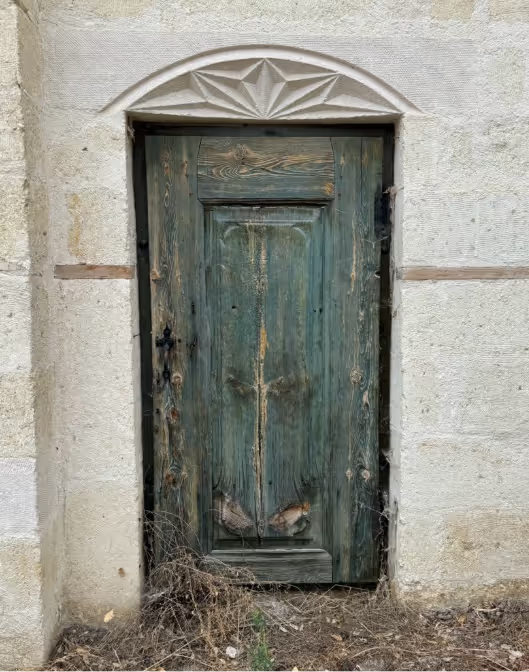
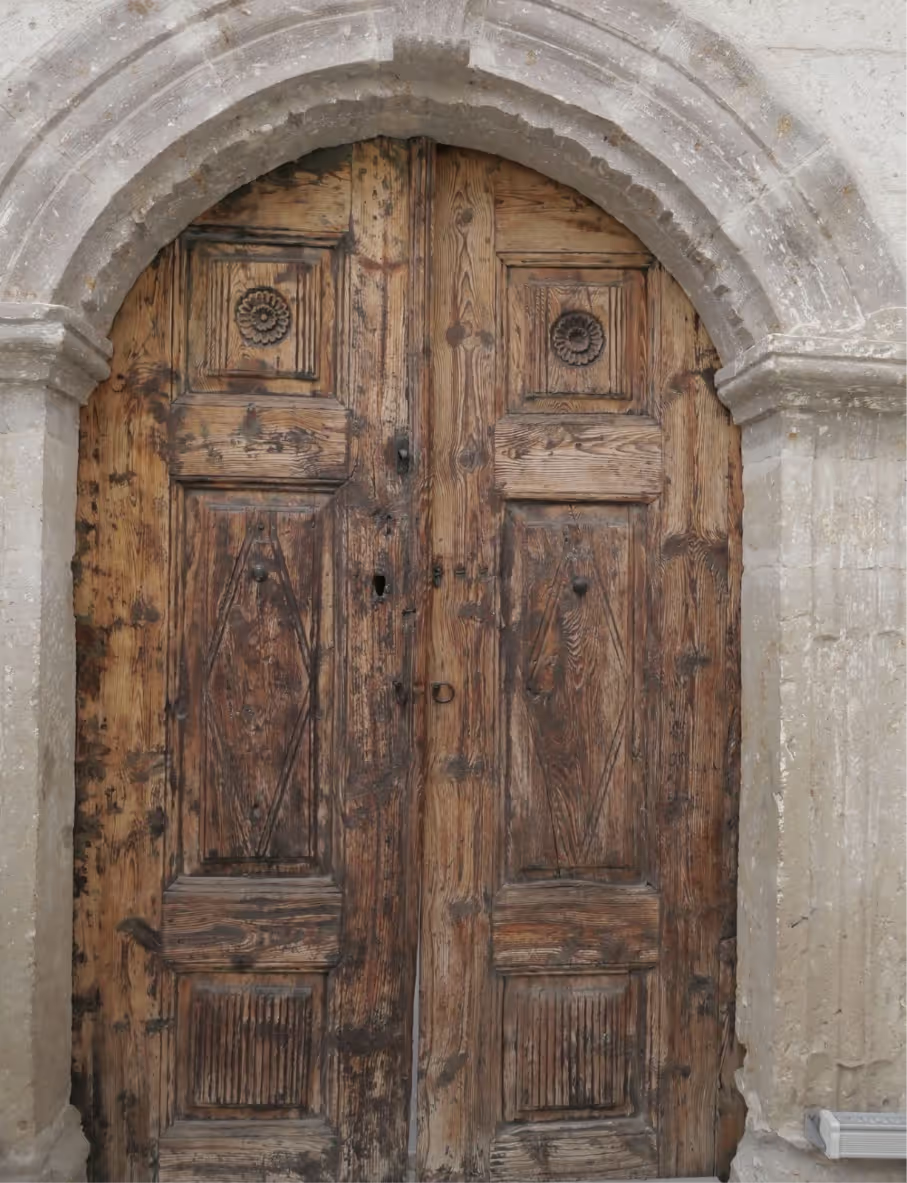
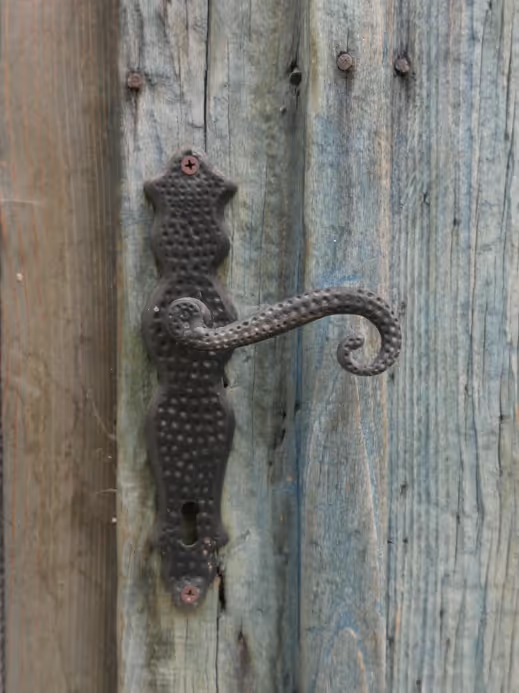
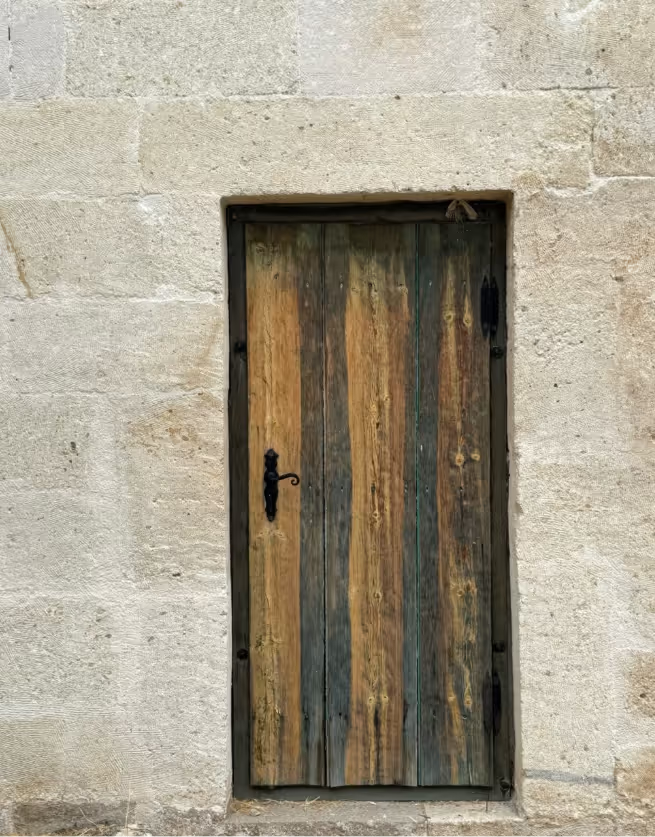
The carved Anatolian Greek doors of Sinasos remain among the village’s most extraordinary details. Each doorway feels less like a functional architectural element and more like a cultural statement — carrying ornamentation, proportion, symbolism, and memory from another era. They represent a level of craftsmanship and identity increasingly rare in contemporary development.
But Sinasos was never only aesthetic.
It was also intellectual.
The village became known for its educational institutions and cultural life, creating an atmosphere where architecture, learning, spirituality, and community existed together. Schools, monasteries, churches, courtyards, and public gathering spaces shaped a settlement that felt deeply human in scale while remaining culturally sophisticated.
This layered identity makes Sinasos fundamentally different from many tourism destinations today.
It is not a place that needs artificial storytelling imposed onto it.
The story already exists.
Christian pilgrimage routes passed through the region for centuries. The cave churches, monasteries, spiritual symbolism, and geological silence of Cappadocia created an atmosphere that naturally attracted seekers, travelers, and religious communities long before the modern hospitality industry existed.
Even today, there is a quiet spiritual intensity within the landscape.
Not loud.
Not performative.
But deeply present.
This is why the future of hospitality in Sinasos requires unusual sensitivity.
The goal cannot simply be to build another luxury hotel disconnected from the cultural memory of the village. The responsibility is much larger than that.
At KK Universal, the vision for future hospitality projects in Sinasos is rooted in preserving and continuing this layered cultural dialogue rather than simplifying it into a touristic aesthetic.
The intention is not nostalgia.
And not imitation.
It is reinterpretation.
Creating spaces that respect the emotional and architectural language of the region while introducing a more contemporary understanding of comfort, wellness, operational quality, and experience design.
A luxury hospitality experience shaped not only by rooms, but by atmosphere, craftsmanship, local gastronomy, spirituality, silence, and cultural immersion.
In this vision, Sinasos is not treated as a backdrop.
It becomes the experience itself.
Its doors.
Its stone textures.
Its courtyards.
Its culinary traditions.
Its artisans.
Its landscape.
Its layered civilizations.
Its emotional stillness.
Because places like Sinasos are becoming increasingly rare in the modern world.
Destinations where multiple cultures once coexisted.
Where architecture still carries memory.
Where silence still exists.
Where hospitality can become not only accommodation, but cultural continuity.
And perhaps that is exactly why Sinasos matters today more than ever.