The New Value of Historic Buildings

Historic buildings rarely fit modern development formulas.
Their floor plans are irregular. Their structures require patience. Their restoration processes are slower, more expensive and often unpredictable.
But this resistance is precisely what gives them value.
In an era where many new developments risk feeling interchangeable, historic buildings offer something increasingly rare: identity. They carry proportion, texture, craftsmanship and cultural memory that cannot be replicated from zero. They already possess emotional authority before a project even begins.
For Kaan Namlıcı, this understanding has shaped a significant part of his development philosophy across hospitality and high-street real estate projects in Istanbul.
Rather than viewing heritage structures as limitations, the approach has been to see them as foundations for long-term relevance. Buildings with stories already embedded into their walls. Places connected to the rhythm of the city long before redevelopment starts.
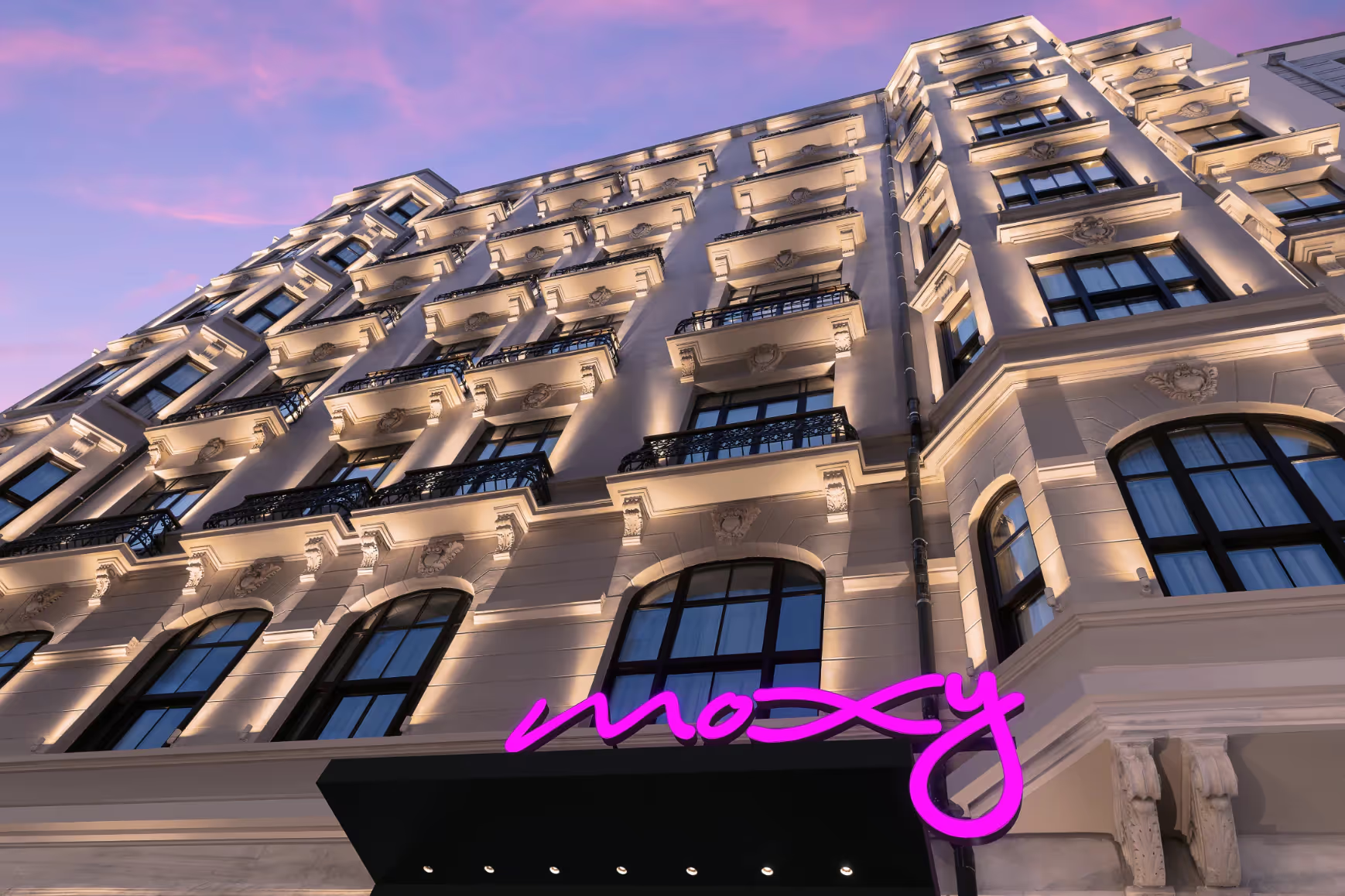
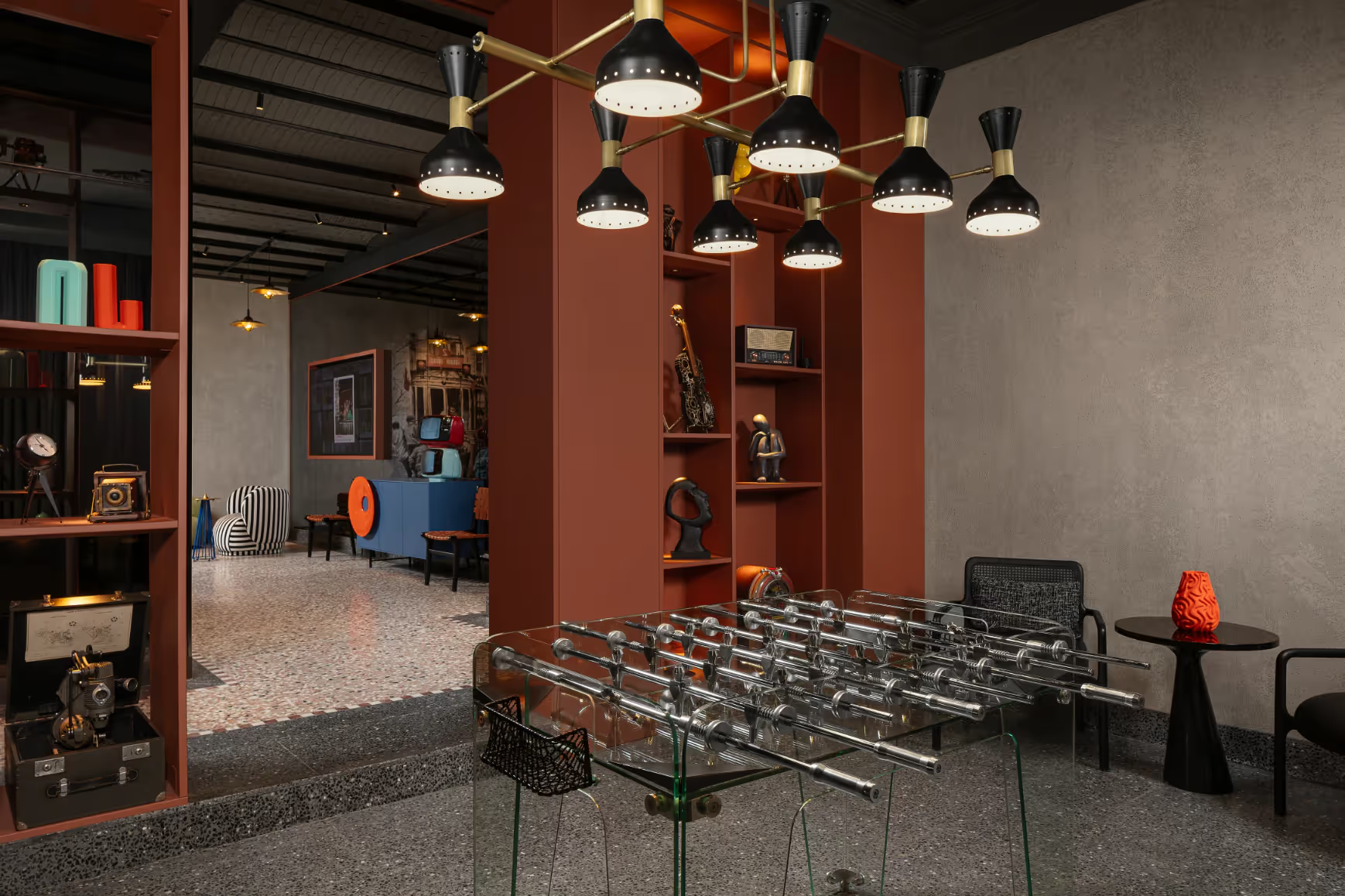
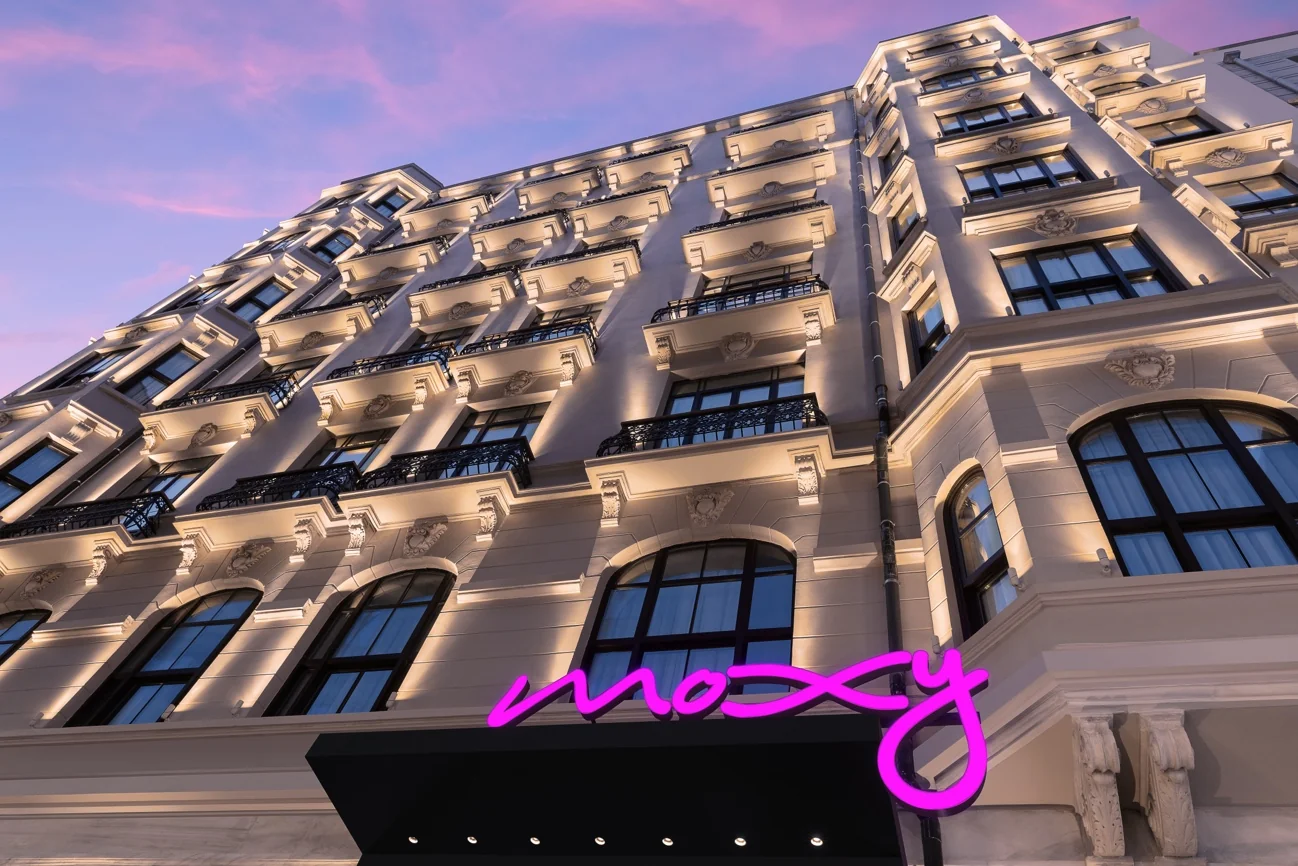
The philosophy can be seen in the transformation of Moxy Istanbul Beyoğlu, Türkiye’s first Moxy Hotel by Marriott International. Rather than creating a generic new hospitality structure, the project emerged through the adaptive reuse of a historic urban building deeply connected to the rhythm of Beyoğlu itself. The value was never only about adding rooms to the city. It was about preserving urban character while introducing a new generation hospitality experience into an existing cultural fabric. Urban assets across Beyoğlu and Istanbul’s historic high streets through KK Universal’s portfolio. Many of these properties carried decades of memory, visibility and symbolic presence within the city. Their value extended beyond real estate metrics. They already belonged to Istanbul’s collective visual memory.
This is increasingly important because modern hospitality is changing.
People no longer seek only perfection.
They seek authenticity.
Texture.
Imperfection.
Narrative.
Historic buildings naturally provide these qualities.
Their corridors feel different because they were built in another era. Their windows frame light differently. Their façades carry the proportions of human craftsmanship rather than optimization software. Even their imperfections create emotional warmth.
Of course, preserving heritage alone is not enough. Historic buildings must still function for contemporary life. They require careful operational integration, modern infrastructure, seismic reinforcement, hospitality intelligence and economic sustainability. The challenge is finding the balance between preservation and evolution.
When done correctly, historic redevelopment creates something difficult to manufacture artificially: timelessness.
Not nostalgia.
Not imitation.
But continuity.
Because the most powerful buildings are often the ones that allow the past and the future to exist in conversation with each other.
.avif)